
Criminal Court Cases in Kootenai County
Kootenai County belongs to Idaho's First Judicial District. Magistrate Court handles misdemeanor and infraction cases, first appearances, and felony preliminary hearings. If a judge finds probable cause after a felony preliminary hearing, the case is bound over to District Court. District Court then handles the felony arraignment, motions, plea or trial, judgment, and sentence. City-code and city-prosecuted matters use this same county and state court structure. Coeur d'Alene prosecutes some local offenses through its Criminal Division, but it does not run a separate public municipal-court database.
The clerk at the Garden Avenue courthouse complex keeps the judicial file. That file is distinct from the arresting officer's report and the jail booking record. Searchers should match the court, case number, filing date, and party before relying on a result, especially when a name is common. The criminal clerk can be reached at 208-446-1170, while the court-records line is 208-446-1180.
Kootenai Felony and Misdemeanor Paths
The court level tells a reader where a Kootenai criminal case stands. A misdemeanor may reach a plea at the first appearance and remain in Magistrate Court through trial and sentence. A felony begins there, but only for the early stages. Probable cause at the preliminary hearing sends it to District Court. An indictment can also place a felony there.
Do not read the first charge as the last word. Prosecutors may amend counts, a plea may resolve fewer charges, or the court may dismiss a count. The docket and judgment show those changes. Coeur d'Alene's official trial material also notes that a misdemeanor jury has six members and that guilty and not guilty are the recognized pleas. These local details help explain why two cases with similar booking allegations can produce very different court files.
Kootenai County Case Record Searches
Begin with the official Idaho iCourt Portal. It indexes statewide trial-court case information. A party name or known case number is the strongest starting point. Narrow the result to Kootenai County and the correct court when filters appear. Online entries can identify a docket event without providing the underlying pleading, so the clerk and courthouse kiosk remain essential access channels.
- Open iCourt and use Smart Search with a party name or case number.
- Narrow by Kootenai location, criminal category, or filing date when those controls appear.
- Confirm the court, case number, filed date, and party before opening the docket.
- Read each charge, event, hearing, judgment, and disposition as a separate entry.
- Call or visit the filing clerk for documents, certification, or an entry not available online.
| Field Label | Type | Required | Notes |
|---|---|---|---|
| Smart Search | Text | Yes | Enter a party name or case number. |
| Location | Dropdown | No | Select Kootenai County or the proper court if offered. |
| Case category | Dropdown | No | Criminal and traffic options depend on portal setup. |
| Date range | Date fields | No | Use filing or event dates when enabled. |
| Reset | Button | No | Clears the current search fields. |
Kootenai Clerk and Kiosk Access
A public search result is an index, not always the whole Kootenai court case. The county places deputy clerks downstairs in the Justice Building at 324 W. Garden Avenue, Coeur d'Alene, ID 83816. A courthouse computer kiosk can expose public case information, and the filing clerk can provide available copies from identified cases. Call the records line before travel when certification, an older document, or a large file is needed. The research did not locate a current official criminal-copy fee table, so the clerk should confirm cost and delivery.
The official Idaho court records route separates requests for one or several named cases from compiled-data requests. Named-case requests go to the filing clerk. Compiled data goes through the Administrative Office of the Courts. JusticeWeb is not a public substitute. Kootenai County limits that system to defense attorneys, victims, and law enforcement users who establish accounts.
The official source page for restricted access is shown below.
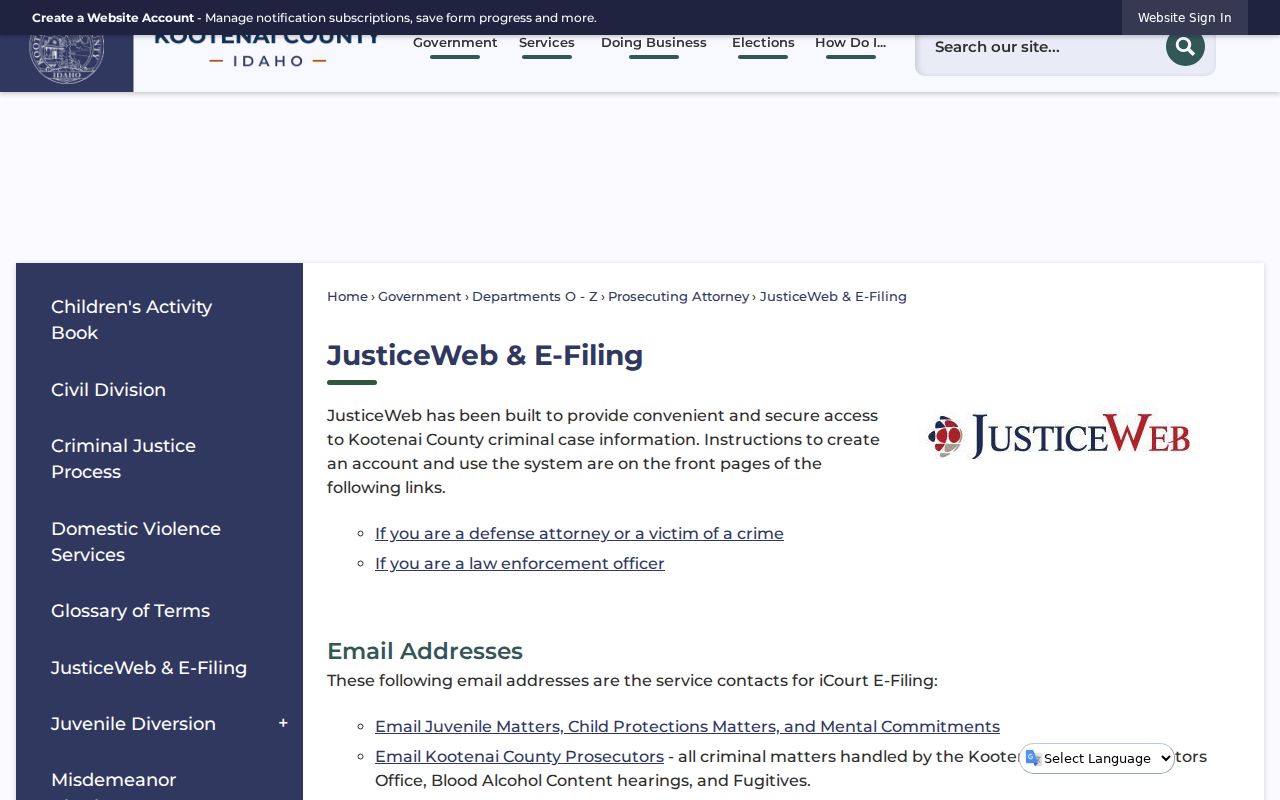
It reinforces that ordinary public case research belongs in iCourt and at the clerk's counter.
What a Criminal Case File Contains
A Kootenai case summary can identify parties, attorneys, court, filed date, status, charges, statutes, events, hearings, the judicial officer, financial entries, and links to public documents. The full file can also include the complaint, motions, minute entries, plea papers, judgment, and sentence. Protected victim information, sealed material, juvenile matters, and restricted personal data do not appear in a public view.
| Case Number & Court | Connects the matter to Kootenai Magistrate or District Court. |
|---|---|
| Charging Document | States the filed allegations, which may differ from booking charges. |
| Docket Entries | Chronological record of filings, orders, appearances, and court action. |
| Hearing Dates | Shows scheduled and completed events and their types. |
| Disposition & Judgment | Records dismissal, plea, verdict, and the formal outcome by count. |
| Sentence & Conditions | May list custody, fines, restitution, service, restrictions, and probation. |
Kootenai Charges and Prosecutor Review
The Kootenai County Prosecuting Attorney represents the State of Idaho in felony cases and county misdemeanors. The office reports handling more than 14,000 criminal matters a year. It also provides victim services and supports specialty-court work. That volume explains why a police allegation and a filed court count should never be treated as identical records.
The prosecutor reviews the arrest material and decides what complaint to file. Once filed, the clerk's docket becomes the reliable place to track amendments and the outcome. The official prosecutor office overview provides the local workload context pictured below.
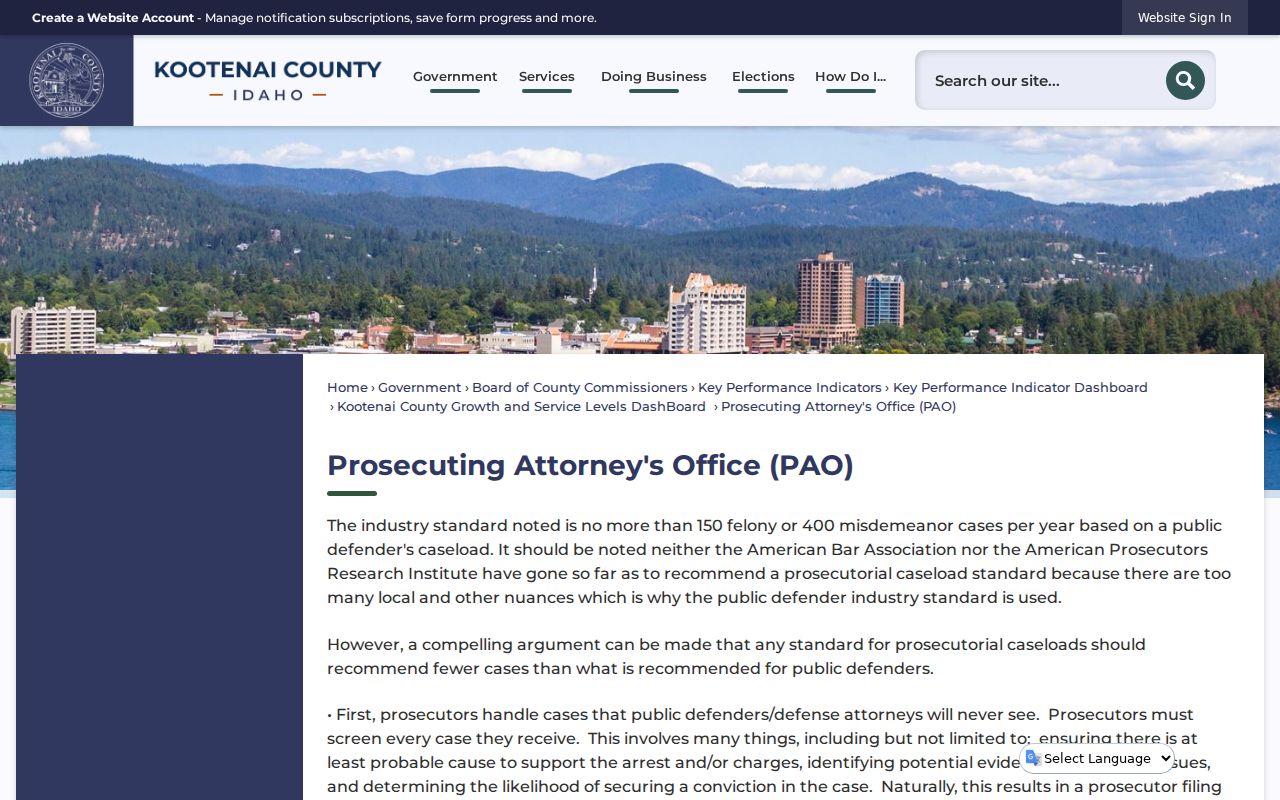
The page helps place each docket within the county office that makes the filing decision.
A second official county source explains the elected prosecutor's authority.
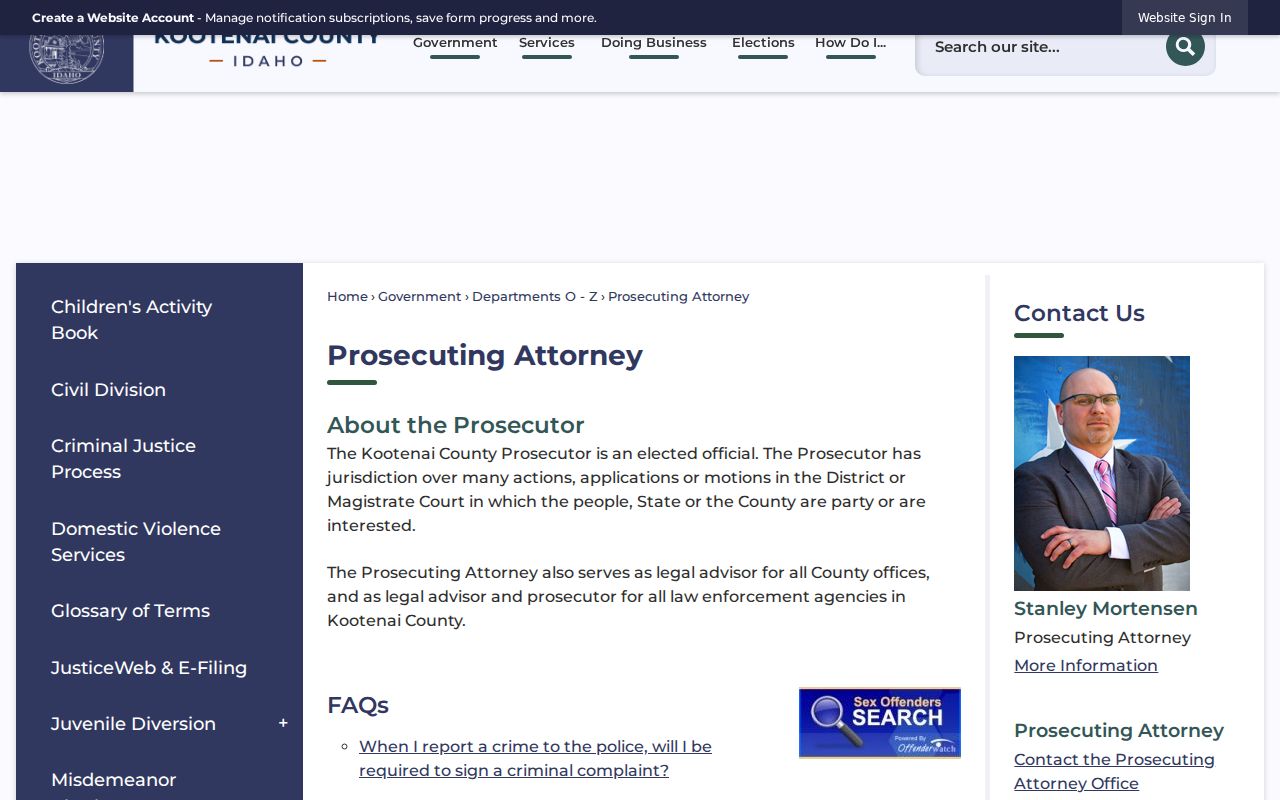
Together, the sources show why the court file, not the initial arrest label, controls the filed charge history.
Criminal Case Stages in Kootenai County
Most local cases start with a complaint, followed by arrest or summons and a first appearance. A misdemeanor can proceed in Magistrate Court. A felony receives a preliminary hearing unless another route applies. If probable cause is found, the felony moves to District Court for arraignment, pretrial motions, plea or trial, disposition, and sentence. An appeal can follow. The docket may show resets and intermediate orders, so the process is rarely a single straight line.
Case flow: Charges Filed › Arraignment › Pretrial › Plea or Trial › Disposition › Sentencing
The county's criminal case process is illustrated in the official capture below.
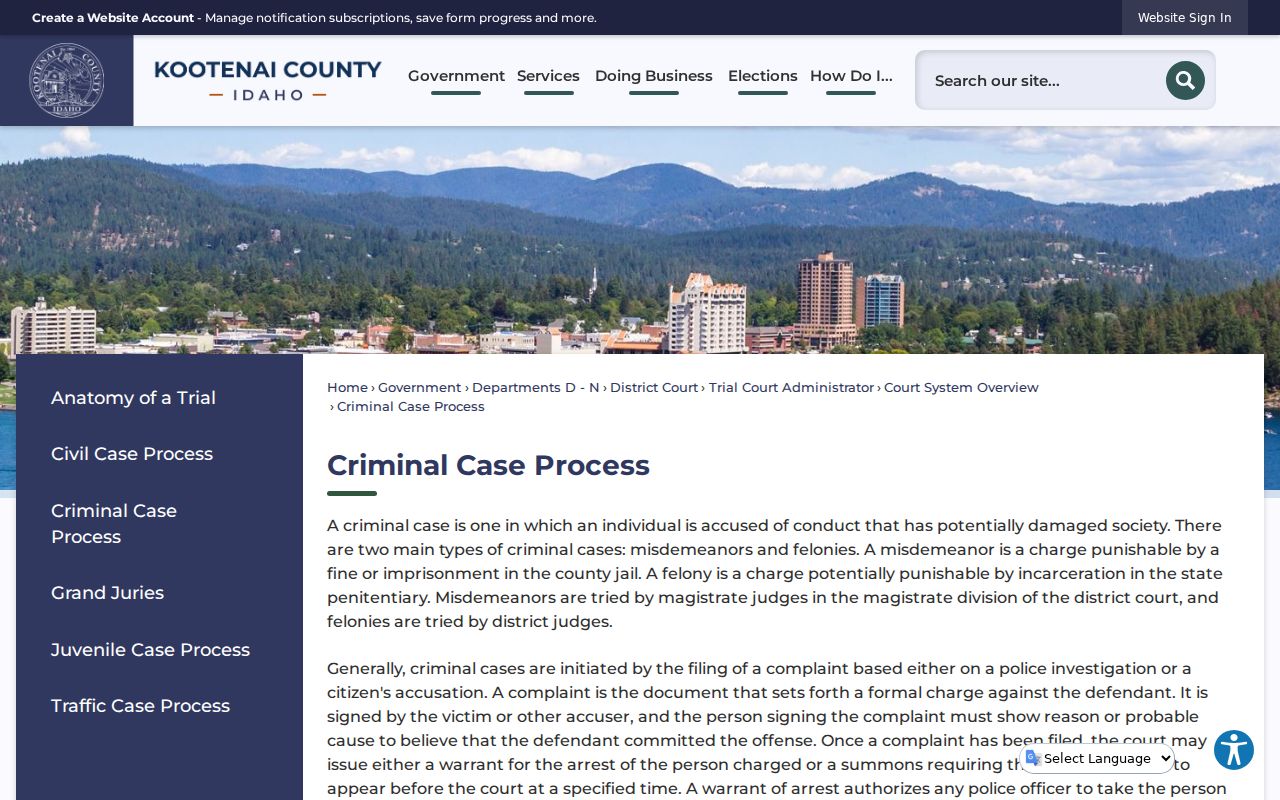
Use that sequence to interpret why an early Kootenai docket may not yet contain a judgment.
Kootenai Treatment Court Dockets
Kootenai County operates DUI, Drug, and Mental Health Court programs. Their dockets can show review hearings, sanctions, graduation, or termination events that do not look like a routine probation calendar. The Mental Health Court began in September 2004. By its founding judge's retirement in January 2025, more than 230 participants had graduated.
A treatment-court entry still belongs to the judicial case. It should be read with the underlying judgment and sentence. A short docket label may not explain the full condition or the reason for a review. Ask the clerk for a public order when the online summary lacks needed context, while recognizing that treatment and medical details can remain protected.
Kootenai Justice Building Expansion
The Idaho judiciary reported that Kootenai County completed a Justice Building expansion in July 2025. It added three courtrooms and support space. The 2025 State of the Judiciary linked the work to heavy demand and noted that visiting judges were covering nearly a full district judge's monthly workload in Kootenai County.
This milestone matters to a record searcher. Recent hearing locations, room assignments, and docket scheduling may not match an old description of the complex. Confirm the current courtroom on the docket or with the clerk. The expansion changed physical capacity, but it did not change the core access chain: iCourt for the public index, the courthouse kiosk for public terminal access, and the filing clerk for documents.
Access Rules for Kootenai Case Records
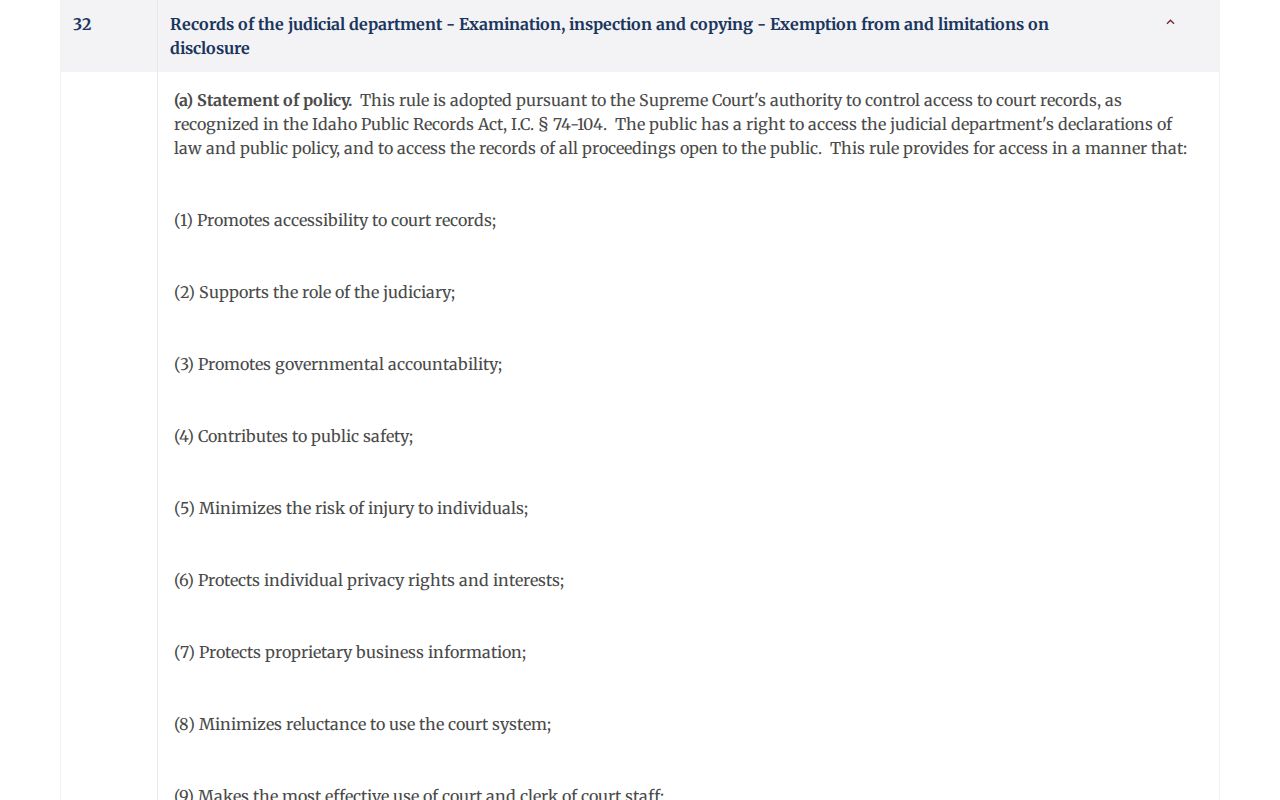
Idaho Court Administrative Rule 32 governs judicial records. It controls Kootenai court files instead of the ordinary Idaho Public Records Act request process. Court records are generally open unless a rule, statute, or court order restricts them. Sealed cases, juvenile records, protected victim information, and personal identifiers may be absent or redacted. Online access can also be narrower than lawful counter access.
The official Rule 32 text is the right source for current access standards.
When a known case does not appear, verify spelling, court, and filing date, then call the clerk. Absence can reflect a filter, delay, sealing rule, or a matter that was never filed.
The judiciary also publishes an official records and camera request route.
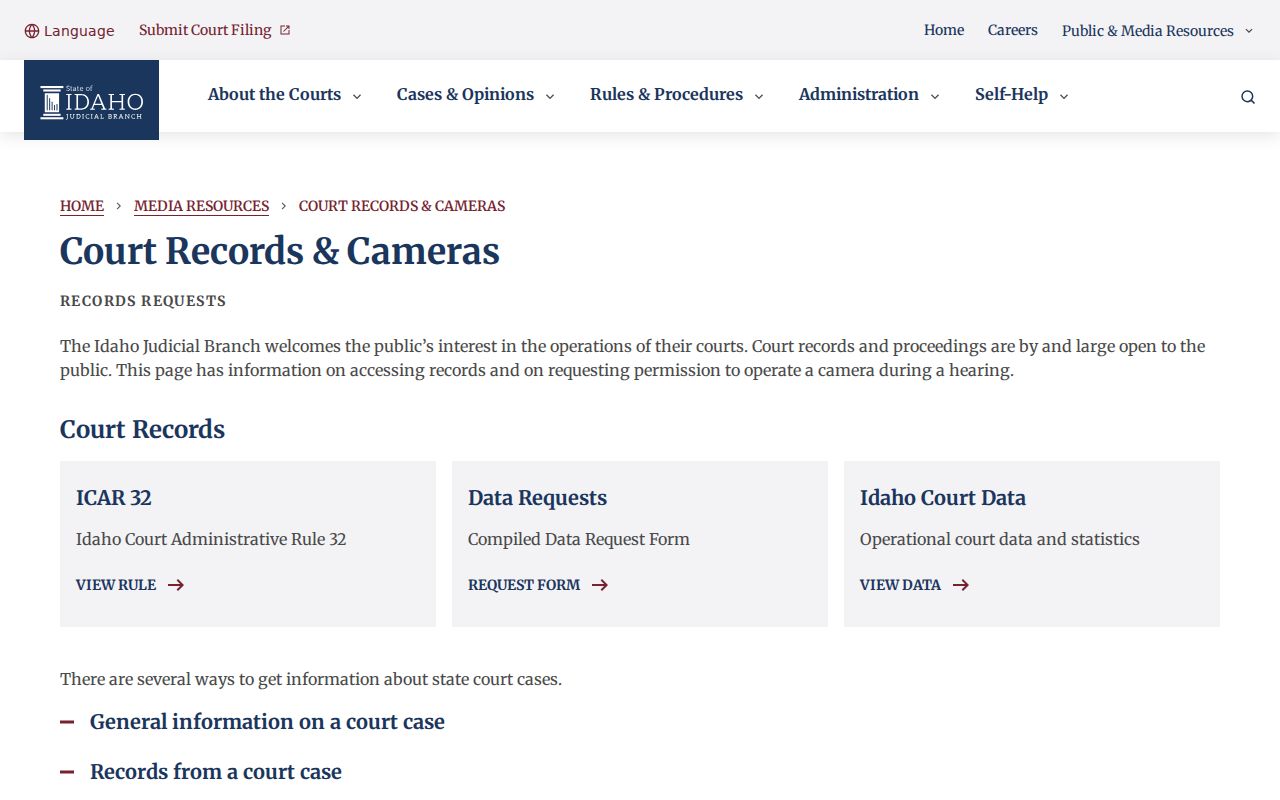
That guidance distinguishes a case-copy request from media access and compiled judicial data.