
Coeur d'Alene Criminal History Checks
Begin with the office that created the record. Coeur d'Alene Police Records holds city incident and arrest narratives. Kootenai County Jail holds the booking and present-custody snapshot. The clerk maintains the judicial file, while Idaho State Police Bureau of Criminal Identification compiles fingerprint-supported Idaho arrest cycles and reported outcomes. Each source answers a different question.
- Ask Coeur d'Alene Police Records for the incident or arrest report.
- Provide the incident date, place, type, involved names and dates of birth, plus a case number if known.
- Search the Idaho iCourt Portal for the court case.
- Use the KCSO current-custody report for a person who may still be held.
- Request a name-based or fingerprint-based check from Idaho BCI when an official statewide record is needed.
A police report does not prove the charge filed or the case outcome. Compare its identifiers and dates with the docket. For a self-review, a fingerprint check reduces the risk of confusing people with similar names.
Schreiber Way to Garden Avenue
Coeur d'Alene keeps city police reports at 3818 Schreiber Way, but court files sit at the county complex on Garden Avenue. That short geographic gap marks a major custodial boundary. Police document what officers saw and did. Prosecutors decide what to file, and the Magistrate Court records pleas, hearings, judgment, sentence, and financial entries.
The official city site helps identify city departments. The county court complex is the better destination for filed cases. This distinction prevents a common error: asking the city records unit for a certified court disposition that only the clerk can provide.
The official city view provides useful context for Coeur d'Alene government records.
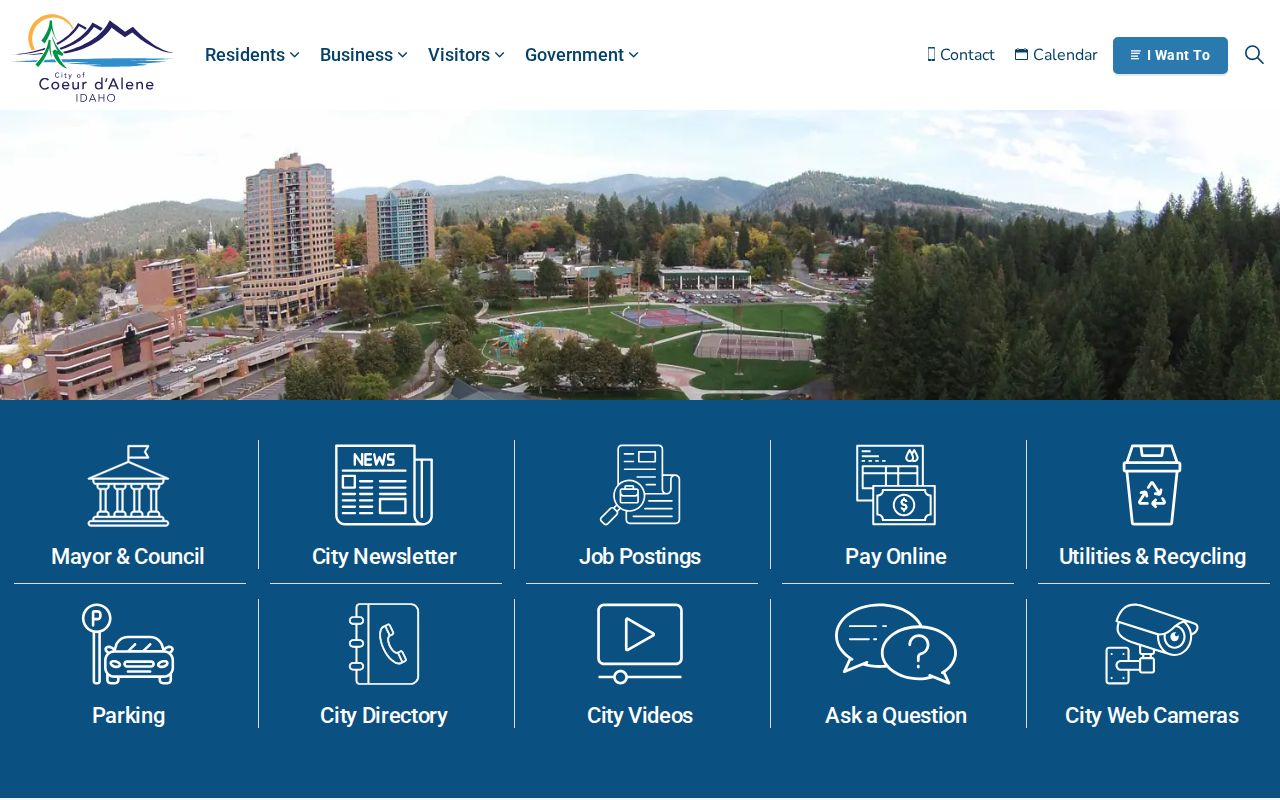
It anchors the local search before the record moves into county and state systems.
Records at the Coeur d'Alene Police Department
The Police Records Division is at 3818 Schreiber Way, Coeur d'Alene, ID 83815. Call 208-769-2320; the fax is 208-769-2307. The counter operates weekdays from 8 a.m. to 5 p.m. Request instructions ask for the incident date, location and type, plus involved persons' names and dates of birth. Include a report number, requested format and delivery choice when known.
One ordinary report or accident report normally has no fee. Body-camera material and requests spanning several reports may produce an invoice, although the first two specialist hours are free. Release remains subject to Idaho law. An active investigation, confidential source, privacy interest, or risk to an investigation can lead to withholding or redaction.
Police Records Division
3818 Schreiber Way
Coeur d'Alene, ID 83815
208-769-2320
Weekdays, 8 a.m.-5 p.m.
Criminal Clerk
324 W. Garden Avenue
Coeur d'Alene, ID 83816
208-446-1170
Records line: 208-446-1180
Coeur d'Alene Single-Report Policy
The ordinary no-fee rule applies to one police or accident report, not to every possible production. Large record sets and body-camera footage demand review, redaction, and media handling. Those tasks explain why a requester may receive a cost estimate even though a basic report is normally free.
Describe the record narrowly. A date, location, incident type and report number let staff identify responsive material without searching unrelated files. Ask whether inspection can meet the need before ordering copies. Narrow scope also makes it easier to explain which portion was withheld and why.
Note: A no-fee single report can still contain lawful redactions.
Booking and Arrest Records in Coeur d'Alene
Coeur d'Alene officers generally transport custodial arrests to Kootenai County Jail rather than a separate city jail. The city creates the police narrative. KCSO creates the booking, photograph, fingerprints, custody status, charges and pending bond fields. The official current-inmate PDF is a snapshot, not a complete arrest archive.
If a name has disappeared from the current list, request the older incarceration or arrest record from KCSO. Then search iCourt for a filed case. A release from jail says nothing by itself about guilt, dismissal, or sentence. Bond is a custody condition, not the court's final decision.
Record flow: Coeur d'Alene Police › Kootenai County Jail › Kootenai Magistrate or District Court › Idaho BCI.
What Coeur d'Alene May Disclose
Idaho's public-arrest disclosure rules can allow the incident and arrest date, time and place; the nature and description of the event; the arrested person's name, sex, age and address; and the charge. Those fields provide a useful event outline, but they do not replace the full narrative or court disposition.
- Arrest report
- The police account of the event and officer action.
- Booking record
- The jail's custody intake and status information.
- Disposition
- The court's recorded outcome of a filed charge.
- Redaction
- Information removed from a released copy under a legal exemption.
Verify identity across records. Names can match, charges can change, and a report may predate the prosecutor's filing decision.
The Coeur d'Alene Municipal Court File
Coeur d'Alene does not run a separate searchable municipal criminal court. The city Criminal Division prosecutes city misdemeanors and infractions, but hearings and records are in Kootenai Magistrate Court. Public users should search iCourt or contact the Garden Avenue clerk. Felonies begin in Magistrate Court and move to District Court after bind-over or indictment.
| Court Name | Kootenai County Magistrate Court, First Judicial District |
|---|---|
| Case Types Heard | City misdemeanors, infractions, traffic matters, first appearances and felony preliminary hearings |
| Case Lookup Channel | Idaho iCourt, courthouse kiosk, or clerk records line at 208-446-1180 |
| What the Docket Shows | Charges, hearings, pleas, motions, judgment, sentence and financial entries |
| Copies & Fees | Request case documents from the filing county's clerk; applicable copy fees may apply |
The city prosecutor is not the elected Kootenai County Prosecuting Attorney. The city office at 710 E. Mullan Avenue handles its misdemeanor and infraction caseload. County prosecutors handle county and felony matters.
Coeur d'Alene Misdemeanor Process
The city's detailed trial-proceedings explanation supplies a local roadmap. Idaho uses guilty and not-guilty pleas in this setting, not a separate no-contest plea. A not-guilty plea can lead to pretrial conferences, status calls and motions. A misdemeanor jury has six jurors.
The official city criminal page illustrates how a Coeur d'Alene record develops in court.
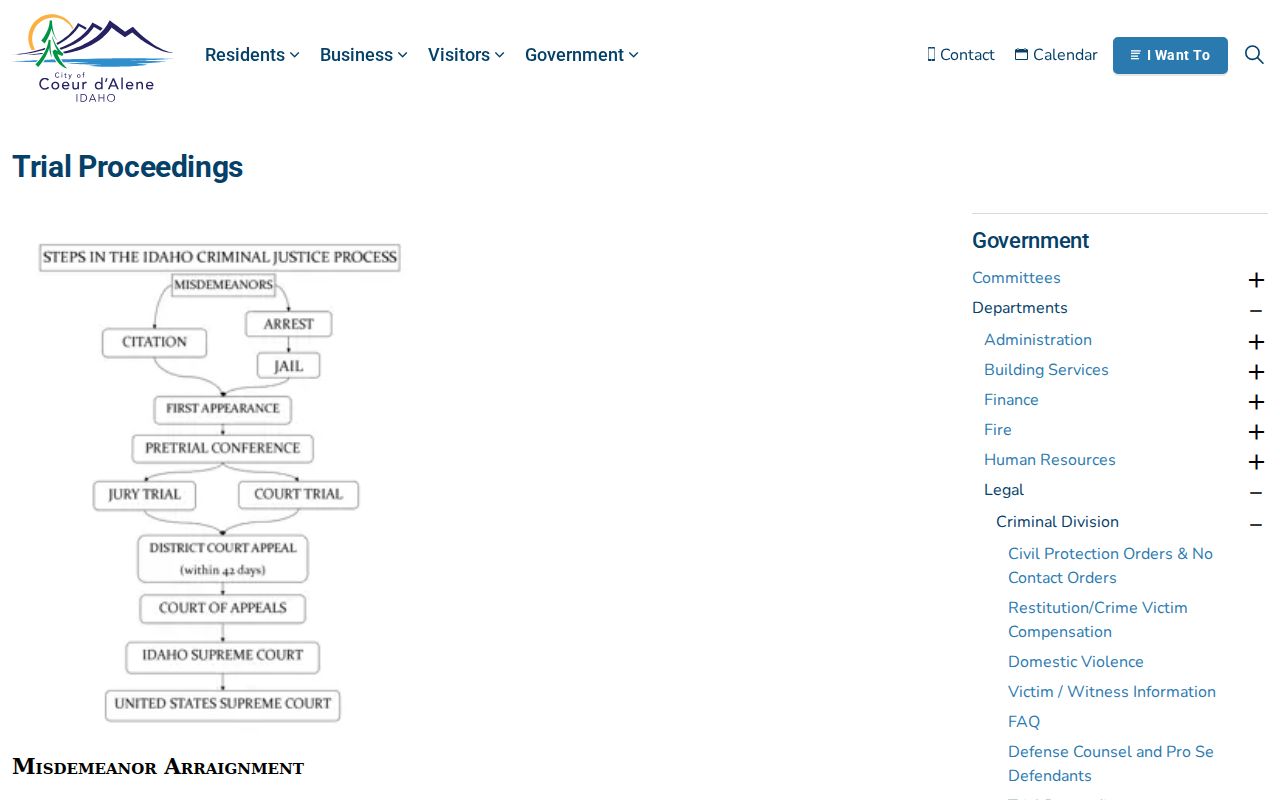
Those steps explain why a new docket can change well after the police report was written.
How Coeur d'Alene Records Reach the County
Fingerprints tied to an arrest are sent to Idaho BCI. Courts and agencies later report dispositions. If no fingerprint card reaches the repository, a local arrest may be missing from the state response. If a disposition has not arrived, the history may show an unresolved cycle even after the court case ended.
Compare all three products. The jail report shows custody, iCourt shows the judicial case, and BCI provides fingerprint-supported Idaho history. BCI covers Idaho events, not a nationwide history. The FBI Identity History Summary is the official personal federal option when broader fingerprint-based review is needed.
Record flow: Coeur d'Alene Police › Kootenai County Courts › Idaho State Police BCI.
Coeur d'Alene Treatment Court Context
Kootenai Mental Health Court began in 2004 and recorded more than 230 graduates during its founding judge's 20-year tenure. Drug and DUI treatment courts also create specialized review events. A docket entry tied to one of these programs may reflect supervision, review, or treatment progress rather than a new arrest.
The Idaho judiciary's Mental Health Court milestone documents this local program.
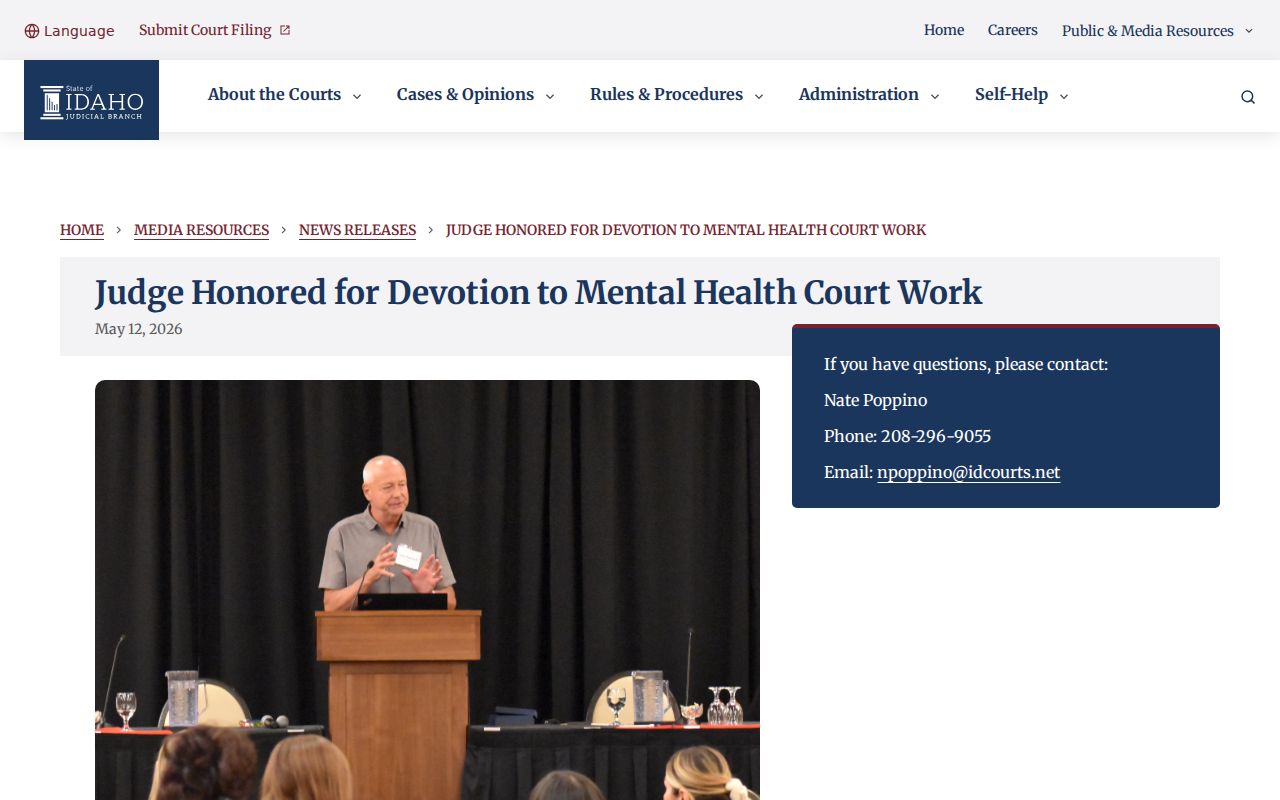
This context helps readers interpret repeated review hearings without mistaking them for separate cases.
Coeur d'Alene Record Access Rules
The Idaho Public Records Act governs city police records. Agencies normally must grant or deny a request within three working days. A written extension can allow up to ten working days when more time is needed to locate or review material. Judicial records follow Idaho Court Administrative Rule 32 instead, so case-copy requests go to the clerk rather than through an ordinary city request.
Key Statutes:
Idaho Public Records Act - establishes access to agency records and the response framework.
Idaho Code § 74-124 - addresses law-enforcement records and permitted withholding.
Idaho Court Administrative Rule 32 - controls public access to court records.
For a record in one identified case, contact the clerk. Requests for compiled court data go through the Administrative Office of the Courts. Do not assume that a city public-record request reaches either route.
Verify Coeur d'Alene Results
Use a case number whenever possible. Match the name, date of birth, event date, agency, charge and case number across the police report, jail entry and docket. A charge in an arrest report is an allegation. The filed charge may differ, and the disposition controls the court outcome.
For an error in one's own Idaho history, obtain the BCI response and use the repository's challenge process. Dismissal does not automatically erase every custodian's copy. Idaho permits narrow fingerprint and criminal-history expungement for specified no-filing, acquittal and dismissal situations, while set-aside or dismissal relief under Idaho Code §19-2604 is a separate remedy.
Recent activity needs special care. A police report can exist before a prosecutor files a complaint, and a booking can appear before the first court hearing. Search again after the expected filing interval, or call the criminal clerk with the report number and event date. If iCourt finds no match, the clerk can confirm whether the case was filed under a different number or remains outside public online access.
Older matters call for the reverse approach. Begin with the court disposition, then compare the BCI cycle and police file. Certified copies come from the clerk, not from a screenshot of an online docket. Keep copies of each response and note which office supplied it. That record trail makes a correction request much easier to explain.
Coeur d'Alene's role as county seat adds one more verification issue. The city Criminal Division prosecutes city misdemeanors and infractions, but the elected Kootenai County Prosecuting Attorney handles county and felony work. A document headed with one office's name should not be attributed to the other. Check the caption, prosecuting authority, court level and case number before combining papers into one history.
A victim notification is also different from a case record. Idaho VINE can provide custody or case-status alerts, while iCourt and the clerk provide docket information. An alert tells the recipient that a tracked status changed. It is not a certified judgment and does not contain the complete police narrative. Use the notice to identify the event, then verify the official record with its custodian.
Finally, distinguish a dismissal from record destruction. Police, jail, court and repository systems have separate retention and access rules. If the case was dismissed, obtain the signed or filed disposition from the clerk. Then ask BCI what its record shows and whether the narrow expungement provision applies. This sequence documents the actual result without promising that every related city or county file will disappear.